
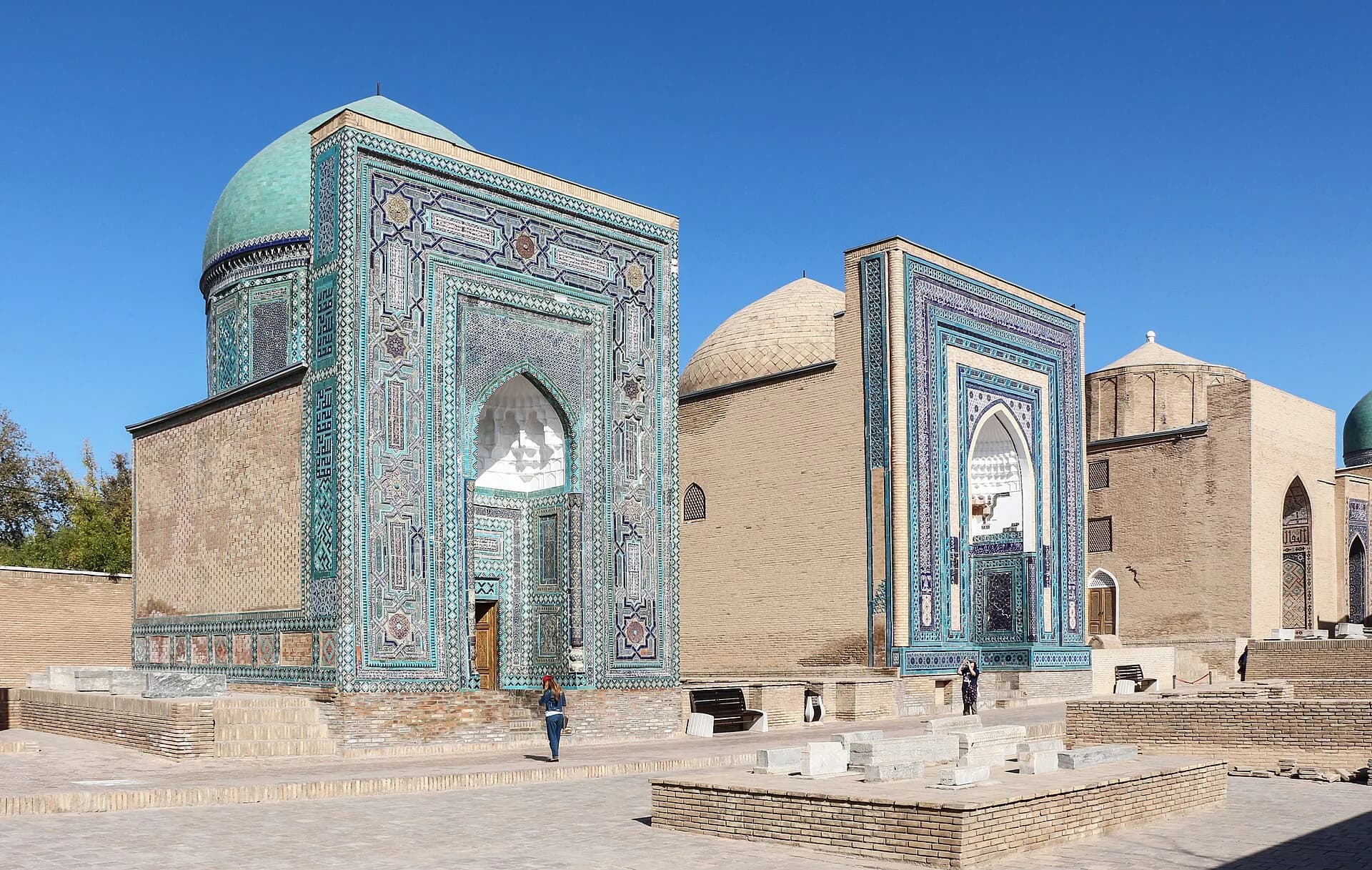
Architecture of Uzbekistan: A Journey Through Centuries of Design
Understand the architectural traditions of Uzbekistan through the monuments of Samarkand, Bukhara, Khiva and beyond.
Architecture is one of the strongest reasons to visit Uzbekistan. The country's historic cities preserve buildings associated with different periods of Central Asian history, creating a visual journey through centuries.
Samarkand is closely associated with Timurid architecture. Monumental portals, geometric decoration, blue and turquoise tilework and large courtyards create a sense of scale and ceremony.
Bukhara offers a different architectural experience. Its historic center contains mosques, madrasas, trading domes and civic structures integrated into a dense urban environment.
Khiva's Ichan-Kala is particularly distinctive because its historic monuments are enclosed within city walls. The result is an unusually concentrated architectural landscape.
Tashkent adds another layer. Modern development exists alongside historic religious complexes and traditional neighborhoods, while the metro introduces a Soviet-era decorative tradition.
When viewing architecture, look beyond the famous facade. Notice tile patterns, carved wood, brickwork, doors, courtyards and the relationship between buildings and public spaces.
A guide can explain why certain structures were built, how religious education worked in madrasas, how trade shaped urban form and how architectural styles changed over time.
Travelers interested in architecture should allow time for museums and craft workshops. Tilework, ceramics, wood carving and textile design help explain the visual language seen in major monuments.
Photography is rewarding, but remember that some sites are active religious places. Follow local instructions and dress appropriately.
Uzora Travel can create an architecture-focused itinerary across Samarkand, Bukhara, Khiva, Tashkent and other historic locations.
¿Estás planeando un viaje por Uzbekistán?
Descubre nuestros viajes privados y traslados, o deja que diseñemos un viaje a tu medida.